


Business Ideas
Emiratisation Rule 2026 – What You Need to Know?
by Adnan Dahhan |
March 15, 2026
As you know, Emiratisation Rule is an actively enforced programme to supercharge Emirati talent in the private sector, aiming for 75,000 nationals by 2026. If your company has 20 or more employees, you must understand the set targets, the real fines, and the compliance steps to avoid enforcement actions such as visa suspensions, license restrictions, and bans on government contracts. The trusted consultants of business setup in Dubai have created this guide to help you act now and stay compliant in 2026.
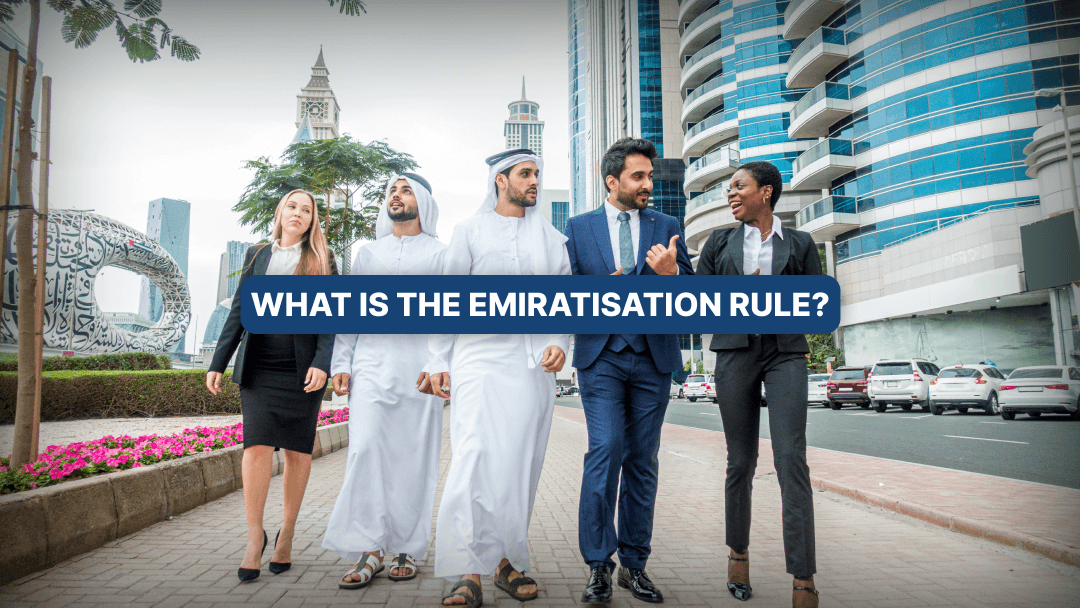
What is the Emiratisation Rule?
Launched in 2021, NAFIS, also called the Emiratisation Rule, isn’t just an enforced rule, it’s an AED 24 billion investment initiative aiming for 75,000 Emiratis in private jobs by 2026. Non-compliance with this rule triggers hefty fines, while staying compliant unlocks potential benefits like priority in government tenders.
Emiratisation Rules – Who Does This Affect?
Not every corner shop, solopreneur, or small startup needs to comply with this rule. Emiratisation targets private companies based on size and sector:
Big Players – Companies with 50 or more employees must increase their share of Emiratis in skilled roles by hiring 2 Emiratis annually.
Mid Sizers – Companies with 20-49 employees, operating in 14 key sectors, are required to hire 1 Emirati in skilled positions annually. The key sectors include finance, healthcare, education, hospitality, construction, logistics, manufacturing, wholesale and retail trading, administrative services, and mining and quarrying. It’s advised to check MoHre periodically and look for the recent updates.
Small Players – For companies under 20 workforces, you are exempt now. But keep eyes on NAFIS or Mohre updates, as more updates are coming on the way.
Requirements of 2% Emiratisation Rule in the UAE
The 2% Emiratisation Rule applies to private sector companies registered in the UAE mainland. The government aims to raise Emirati employment in skilled roles to 6% by 2024, 8% by 2025, and 10% by 2026. To achieve this, companies are required to hire UAE nationals in line with their workforce size, as follows:
50 skilled employees → Minimum of 1 Emirati hire annually
51–100 skilled employees → Minimum of 2 Emirati hires annually
101–150 skilled employees → Minimum of 3 Emirati hires annually
151+ skilled employees → Minimum of 1 Emirati hire for every 50 skilled employees
These quotas are not optional – they are mandatory requirements as monitored and governed by the Ministry of Human Resources and Emiratisation (MoHRE). Companies that fail to meet them face hefty fines and other penalties such as employement visa restrictions, licence suspensions, and inability to participate in government contracts.
Emiratisation Fines & Penalties You Must Know
Non-compliance with the Emiratisation targets is not a matter of warnings or petty fines. The penalties are designed to be a powerful deterrent, escalating annually.
For companies with 50+ employees that fail to meet their quotas, the penalty is a monthly fine for each unfilled Emirati position. The annual fine for each role is AED 108,000, with the fine amount increasing by AED 1,000 annually until 2026.
The government is also cracking down on “fake” Emiratisation. Companies found to have hired Emiratis on paper to meet targets without providing them with genuine work or a valid contract face even more severe penalties, including fines of up to AED 500,000 for repeat offenses.
Non-compliant companies may face restrictions on new work permits and could be downgraded in MoHRE’s classification system. And this can affect the reputation in the market and be a hindrance to securing new visas and government contracts.
Hire UAE Nationals Under NAFIS Program
Instead of viewing Emiratisation as a burden, smart employers are seeing it as a strategic opportunity to grow in the UAE, as exceeding the Emiratisation target can lead to a higher company classification, and offering perks like discounts on Mohre Services, and priority on issuing new visa quotas.
To assist employers in hiring qualified and skilled Emirati, Nafis created a dedicated platform with a comprehensive database of qualified Emirati job seekers. This is the best portal for finding skilled nationals, from recent graduates to experienced professionals. Moreover, Nafis program also facilitates training and upskilling initiatives for Emiratis, ensuring they are well-equipped to contribute to the private sector. By using Nafis’s portal, companies can access a pool of skilled talent.
Sum Up on Emiratisation Program 2026
In 2026, the Emiratisation Rule will be a core part of doing business in the UAE. So, before we enter 2026, it’s crucial to keep track of the number of UAE nationals you employ and have a system to monitor the number of resignations, as this ensures proper compliance with the rules.
Whether you are getting a new business license, want a UAE National work permit, or want to stay updated with the latest Emiratisation rules, Dahhan Business Services will be the right choice. We are the reliable business consultants in Dubai, assisting business owners to navigate the complexities of the UAE business landscape and help them make their business successful. Contact us now to get started!
Thank you! Your submission has been received!
Oops! Something went wrong while submitting the form.




.svg)

Dahhan Business Services is a private consultancy, not affiliated with any government authority. We assist with company formation and related business services in the UAE.


.svg)